
Clinical biomechanics
We measure what health makes possible.
Moviq Health brings clinical biomechanics into healthcare, turning movement into objective health data. We give healthcare a new dimension to measure and understand movement and function, equipping physicians with objective biomechanical evidence to make data-driven decisions about care.
Illustrative chart of vertical force through one walking gait cycle. The reference curve peaks at 1.18 times body weight at loading, dips to 0.76 at mid stance, and peaks again at 1.12 at push-off. The dotted curve represents this study. The shaded region represents normal deviation. During swing, vertical force returns to zero body weight.
01 · The lab
Every step contains valuable health data.
Our lab creates a controlled environment to capture the health data within movement. Advanced biomechanical systems measure movement, force, and stability with precision, while standardized testing creates data that can be consistently compared across patients, against healthy reference values, and throughout an episode of care.
02 · What we measure
From performance
to patient care.
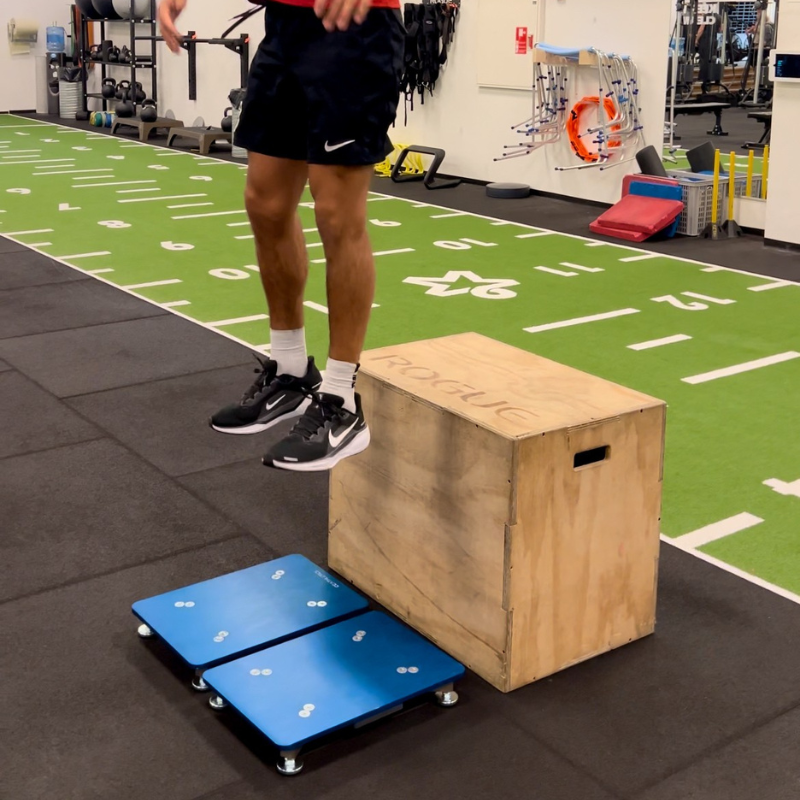
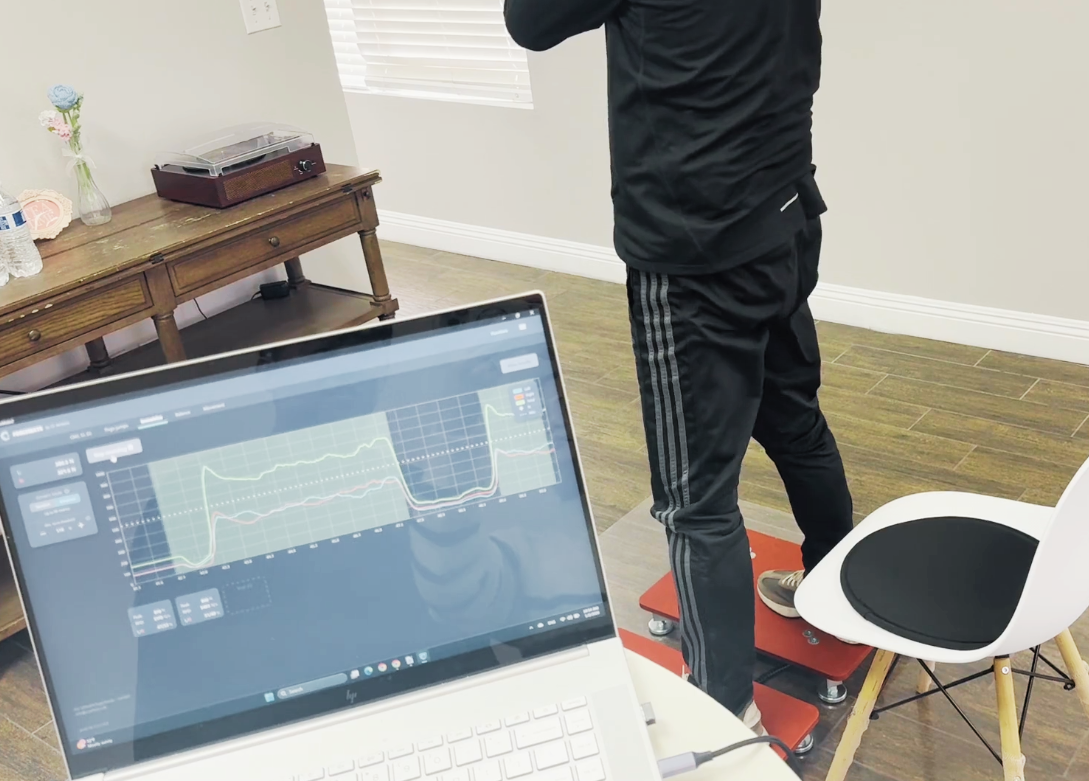
The same biomechanical data used in elite athletics to measure performance and understand recovery can also measure function in healthcare. The biomechanical metrics are fundamental to movement, and we bring the same precision used in elite sports to measure these capabilities in patients.
-
Elite sport
-
Healthcare
03 · The report
Turn movement
into clinical data.
The decisions physicians make shape the trajectory of care. We bring the highest quality of functional data into healthcare by turning movement into standardized data physicians can use to understand how function changes over time.
Explore the reportClinical summary
01 · Overview of function
The patient walks independently and demonstrates gait measures within reference. Reduced lower limb force production may limit higher demand activities, including stairs, rising from a low chair, and uneven ground. Independent mobility has been restored, but higher level physical capacity remains limited.
02 · Key findings
Gait measures are within reference, including walking speed and step timing. Force measures show reduced peak force, slower force development, and asymmetry between limbs. Balance measures indicate increased postural sway and reduced limits of stability.
03 · Comparison to prior tests
Gait speed has improved from 0.96 to 1.10 m/s and is now within reference. Peak force has increased from 8.4 to 10.2 N/kg, while force asymmetry has improved from 23% to 16%. These changes indicate meaningful progress, although force and symmetry remain below reference.
Why we built this
Health is lived
through how we move.
- Imaging Structure
- Blood work Physiology
- Biomechanics Function
Healthcare can measure the structure and physiology of the body in extraordinary detail, but how people move and function is still largely described. Moviq Health brings that same precision to movement, giving physicians a clearer way to understand recovery, measure functional change, and help patients return to the activities that matter to them.
Read our story