
We Measure
What Health Makes Possible.
Health is the freedom to move, the ability to do what matters, and the moments you get to enjoy. Moviq Health turns movement into measurable data, giving clinicians a clearer view of what patients can do and how function changes over time.
Sun et al. · PeerJ 2018 · 1.34 m/s · Peak 1.42 BW
01 · The lab
Built for the details.
Engineered for the human body.
Every assessment captures how a patient moves through real tasks. Walking. Producing force. Maintaining stability. Controlled testing turns each movement into precise data, giving clinicians a clearer view of function and how it changes over time.
02 · The standard
Precision, Applied.
From performance to care.
Movement has been measured at extraordinary levels of precision. We believe that precision belongs in healthcare too. Moviq Health brings objective movement measurement into care, giving clinicians a clearer view of function, recovery, and everyday capability.
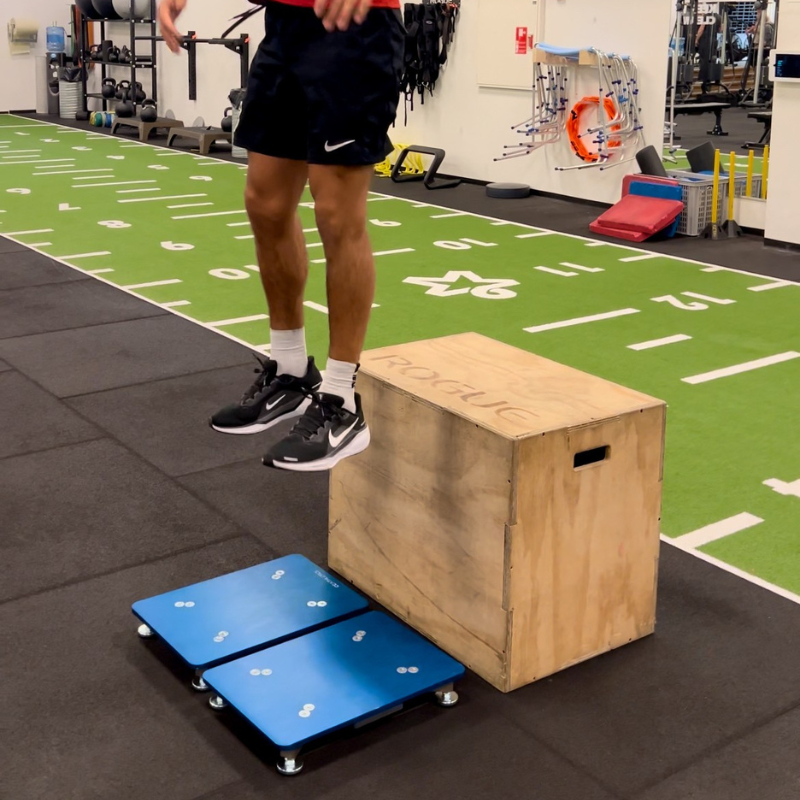
Biomechanics helped elite athletes understand performance at a level the eye could never capture alone.
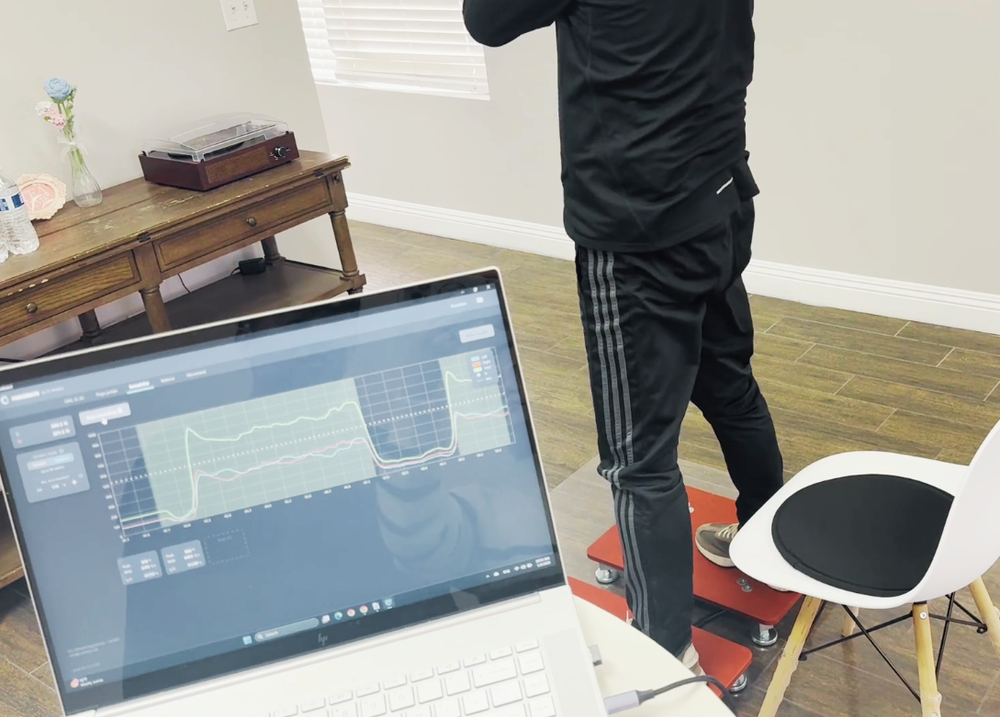
Now that same precision can help clinicians measure function, understand recovery, and see what patients can do beyond the clinic.
03 · The report
Complex movement.
Clear clinical insight.
Every assessment produces detailed biomechanical data. Moviq Health turns those measurements into a structured clinical report that shows what a patient can do, where limitations appear, and how function changes over time.
Clinical summary
01 · Overview of function
The patient is able to walk independently at an expected pace and maintain functional mobility for everyday activities. However, limitations in force production and postural control may affect activities that require greater strength or stability, such as rising from a chair, climbing stairs, turning, or walking on uneven surfaces.
02 · Key findings
Gait speed, cadence, and both left and right stride lengths are within reference. Relative peak force, rate of force development, and force symmetry are outside reference, indicating reduced force capacity and asymmetry in force production. Balance measures are also outside reference, including mCTSIB performance and limits of stability.
03 · Comparison to prior tests
Compared with the assessment six months ago, walking performance remains stable, with gait speed unchanged at 1.10 m/s and cadence increasing from 102 to 108 steps/min. Left stride length remains unchanged at 1240 mm. Force production remains at 10.2 N/kg, while force symmetry remains at 16%, indicating persistent limitations in force production and distribution.
Results
| Metric | Measured | Reference | Status |
|---|---|---|---|
| Gait speed | 1.10 m/s | ≥ 1.00 | Within |
| Cadence | 108 spm | ≥ 100 | Within |
| L stride length | 1240 mm | ≥ 1150 | Within |
| R stride length | 1280 mm | ≥ 1150 | Within |
| Relative peak force | 10.2 N/kg | ≥ 22.0 | Outside |
| Relative RFD | 26 N/s/kg | ≥ 90 | Outside |
| Force symmetry | 16% | ≤ 10% | Outside |
| mCTSIB - Eyes Open, Firm Surface | 46 cm | ≤ 30 | Outside |
| Limits of stability | 346 cm² | ≥ 370 | Outside |
Why we built this
Health is measured
in what you can do.
From moving with confidence to returning to the activities that matter, function is part of how health is experienced. Moviq Health makes that function measurable, giving clinicians a clearer view of the person beyond anatomy.
DISCOVER WHY →